
Roof Rights
Using the azotea

As I prepare to post this latest reflection on living in Spain, I am keenly aware of the challenging times and news in the US. I offer this story as a break from the headlines and hope that you are finding ways to take care of yourselves. Spain has had its share of bad train news in the last week, and extreme weather, but I am going to share about something more quotidian—drying laundry.
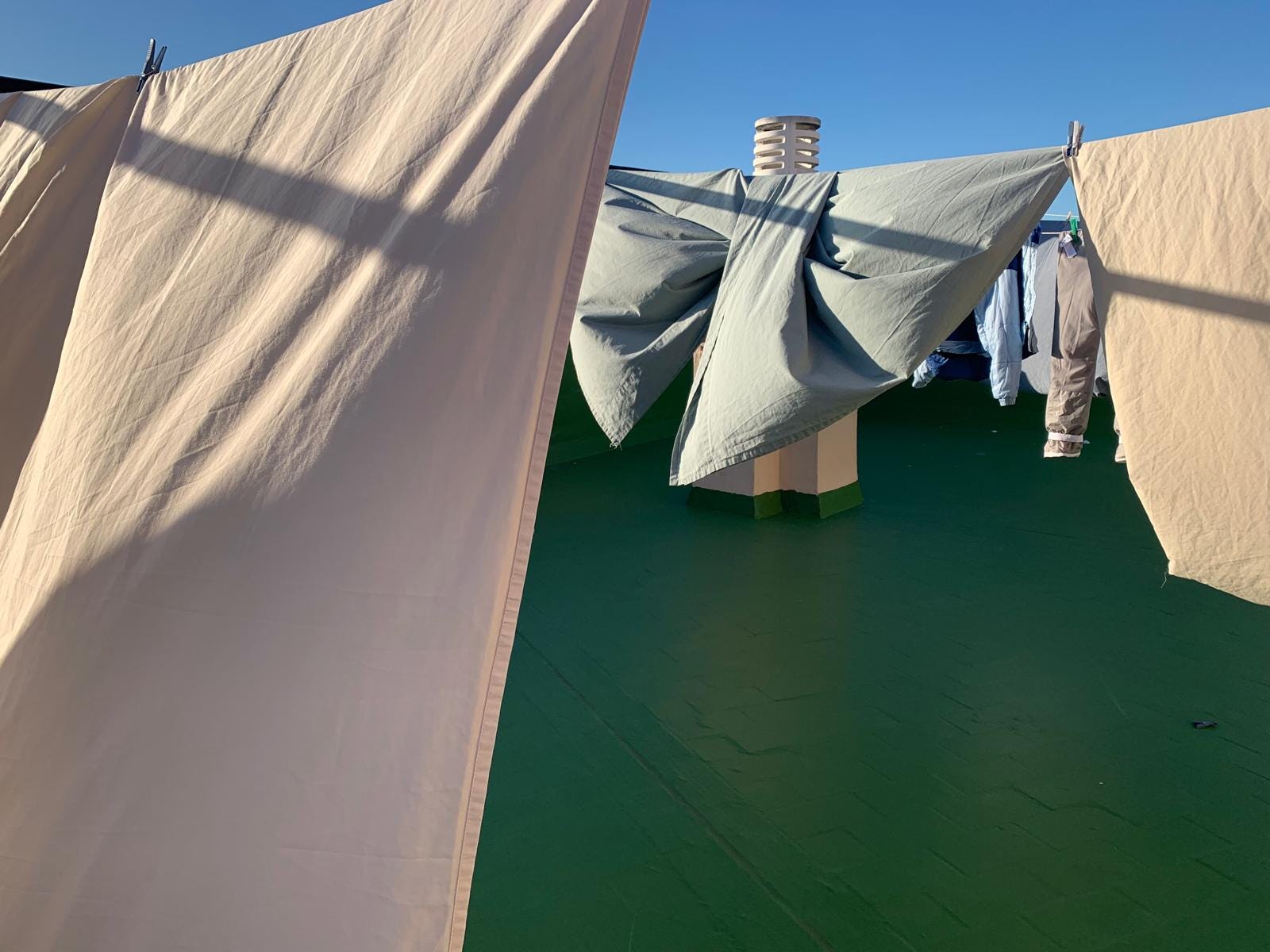
When we checked into our first Airbnb in Sevilla, back in late November, the host told us that there was a roof where we could see a view of the city. We went up on our second day and noted both the view and that the space was filled with lines for drying laundry. Looking around the other rooftops (or azoteas in Spanish), we noted that most of them were filled with laundry lines.
One big difference between life in the US and Spain is our appliances. Both the size of them and how we use them. Electricity has historically been more affordable in the US than Europe and while most Spanish apartments have washers, very few have driers. On previous visits to Spain, the apartments we stayed in all had clothes drying racks that we used to dry clothes indoors. But during winter, when there is little heat indoors and it is damp inside, drying clothes indoors is difficult. Apartments on upper floors often have racks that hang off the sides of the buildings, but for a first or second floor apartment there is not enough light in winter to hang clothes out the window.
The Sevilla apartment was on the first floor and there was a washer on a patio that apartment had access to. In warmer weather we could have dried our clothes out there, but it got very little sun in late November. So after we did our laundry, we headed to the roof and hung it up. To us the roof looked like an open communal laundry drying area, so we took the first lines we saw, hung up our clothes and headed out for a walk.
When we came back a few hours later there was a new sign on the door to the roof. I wish I had taken a picture of it. But it said that there are rules to how the roof is used for laundry and that each apartment has their own area on the roof and that the lines on the east side of the roof, where we had hung our clothes, belong to Apartment 3 derecha (3 right). To follow was a list of all of the other apartments in the building and which geographic areas of the roof they had access to. The note was written in blue ink, but pink, green and yellow highlights were used to call attention to the apartment numbers and their designated areas on the roof.
Oscar and I read the sign in the dark of the hallway, talking to each other and translating it as we did.
I said to Oscar, “I don’t see our apartment listed on the sign.” We were 1 izquierda (1 left) and only apartments on the second and third floors were listed.
We pushed open the door to the roof and saw that our clothes were no longer on the line where we had left them, but instead had been moved to another area. Thankfully it was bright outside and our clothes had been out long enough that they were almost dry. Not wanting to upset the owner of the lines we were now on, we took the clothes down and set up a clothes rack in the kitchen to finish our drying.
I sent our hosts a message saying that we were sorry if we upset a neighbor with our laundry, but we did not know that we were not supposed to put it on the roof. We later ran into them on the street, as they lived down the block, and when we shared what happened with them in person they were shocked. They said they did not know that there were dedicated drying areas on the roof and told us not to worry.
We did not worry that much, but when we got to another apartment a few weeks later in a small town south of Cádiz called San Fernando, before doing laundry we asked the host over text where we could dry our clothes. He shared that we could use the azotea, but that we could only use the clothesline marked “IE.” He then sent us an image showing us where to find the line. When we got upstairs to hang our clothes, we noted that ours was the only line with its unit marked on it, as it was likely the only rental unit in the building. We happily dried our clothes and met other neighbors while we did.
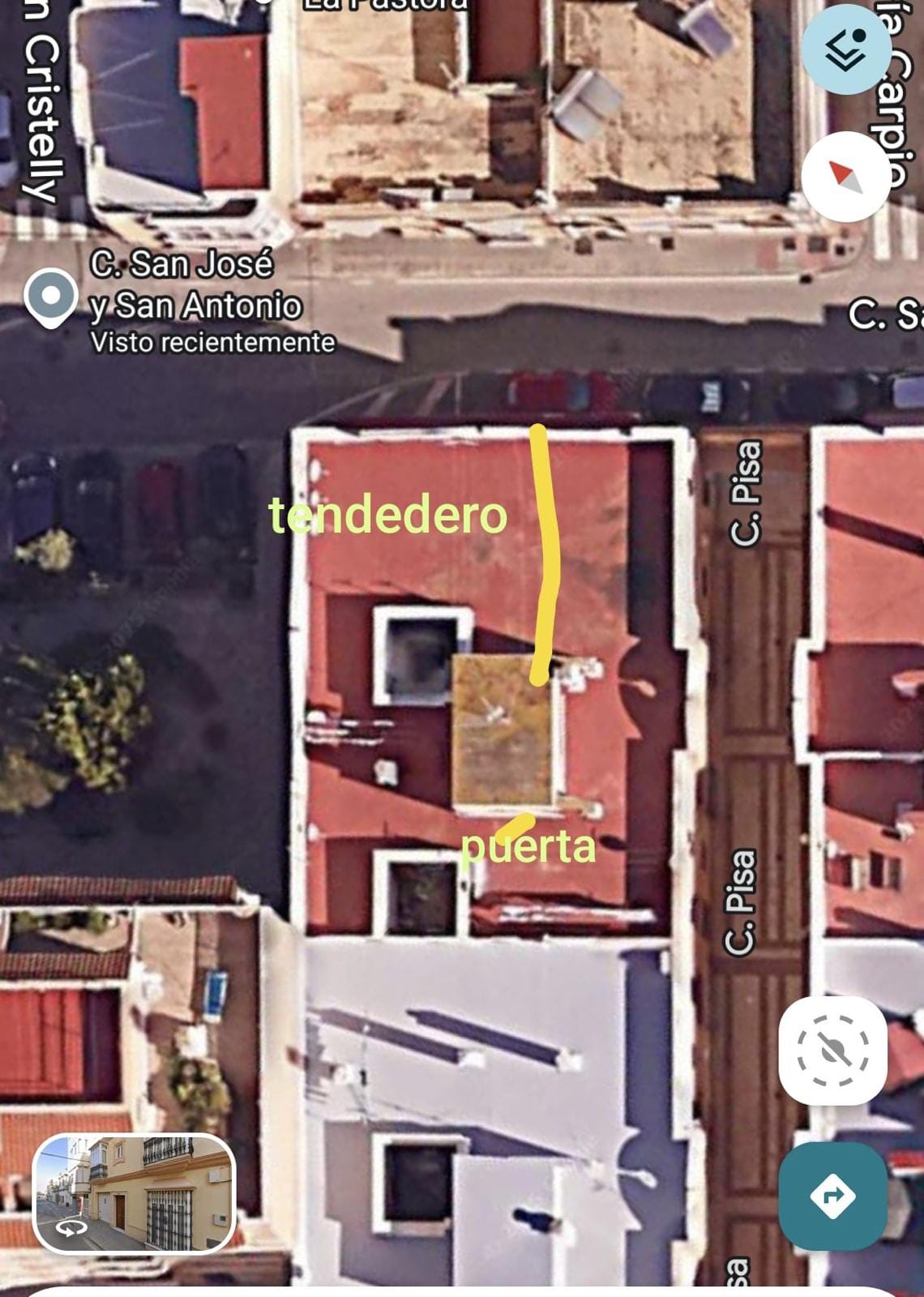
When we got to our final apartment before moving into our longer-term rental the host showed us the washer and when we asked about drying, she said we could use the azotea. We asked her if there was an area on the azotea for her unit and she said no that is was a communal space and that everyone shared the lines. We went up to look before doing laundry and noted that there were many clotheslines, none of them were marked and all but one was empty.
On the day we did laundry, we avoided the lines that had clothes pins on them, choosing ones that looked less “claimed” than the others. We left our clothes and when we came back a few hours later we were surprised to see sheets hanging on the lines that our clothes had been on. “What the…” Oscar started to say and then I pointed to a pile.
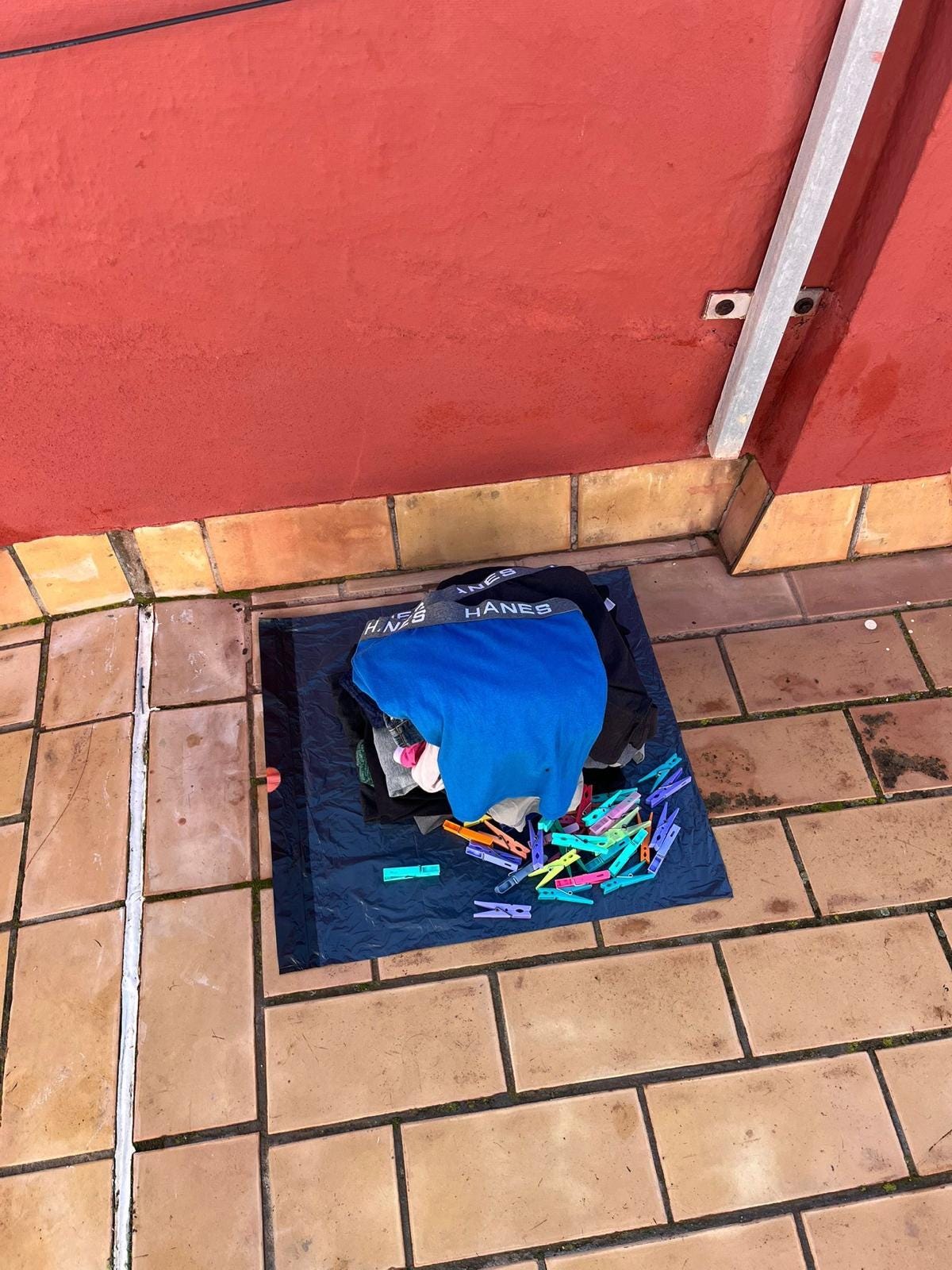
Our clothes had been moved into a folded pile and placed on top of a plastic garbage bag. The bag was a considerate touch as the roof was dusty, but there were over 10 clotheslines on this roof and the only one that was occupied now had the sheets (and not our clothes) on it, so we did not understand what had just happened.
On our way back down to our apartment with our basically dry clothes, but some damp jeans, we got a text from our host. She apologetically told us that a neighbor had recently put up some new lines that were his and we happened to use those very lines, so he took our clothes down and sent her a photo of them. She then explained that we could use a different set of lines adjacent to where we had hung our clothes.
Since we were back in the apartment and the clothes were basically dry, and the sun was starting to set, we did not return our clothes to the appropriate lines, but instead marveled at the roof rights culture. Our unit must be the only short-term rental in this rather large 10-story building as otherwise how else did the other resident know who to text the image of our clothes to??
Our host was very apologetic and it really was not a big issue, but it has brought me a chuckle since. We had our stuff in someone else’s area, I get that, and if all of the other lines had been used, I could see the need to take our clothes down and fold them up on top of a plastic bag, just as at home, if someone leaves their clothes in a drier in a communal laundry room for too long, and there are none others available, I will take the dried clothes out and put them in a basket.
But in this case there were 10 other free lines to use!
There had been a lot of rain before this day. More rain that was seasonable, so perhaps this person was very engaged and devoted to their laundry process, eager to have their sheets dry on their new lines that they had not been able to use yet due to all of the rain. But this person also could have just taken a picture of our clothes on his line, texted that to our host and used another line. But they needed to use their lines in that moment.
We have now moved into a longer-term rental and we asked the super about using the azotea for drying laundry and if there were any areas that we should use. He told us that this is a community where all pay a fee and all have equal access to the roof. He cautioned us to not hang our laundry on days with strong winds as clothes have been known to fly off if the wind gets too strong. But he assured us we could hang our clothes anywhere. And so far that has been true.
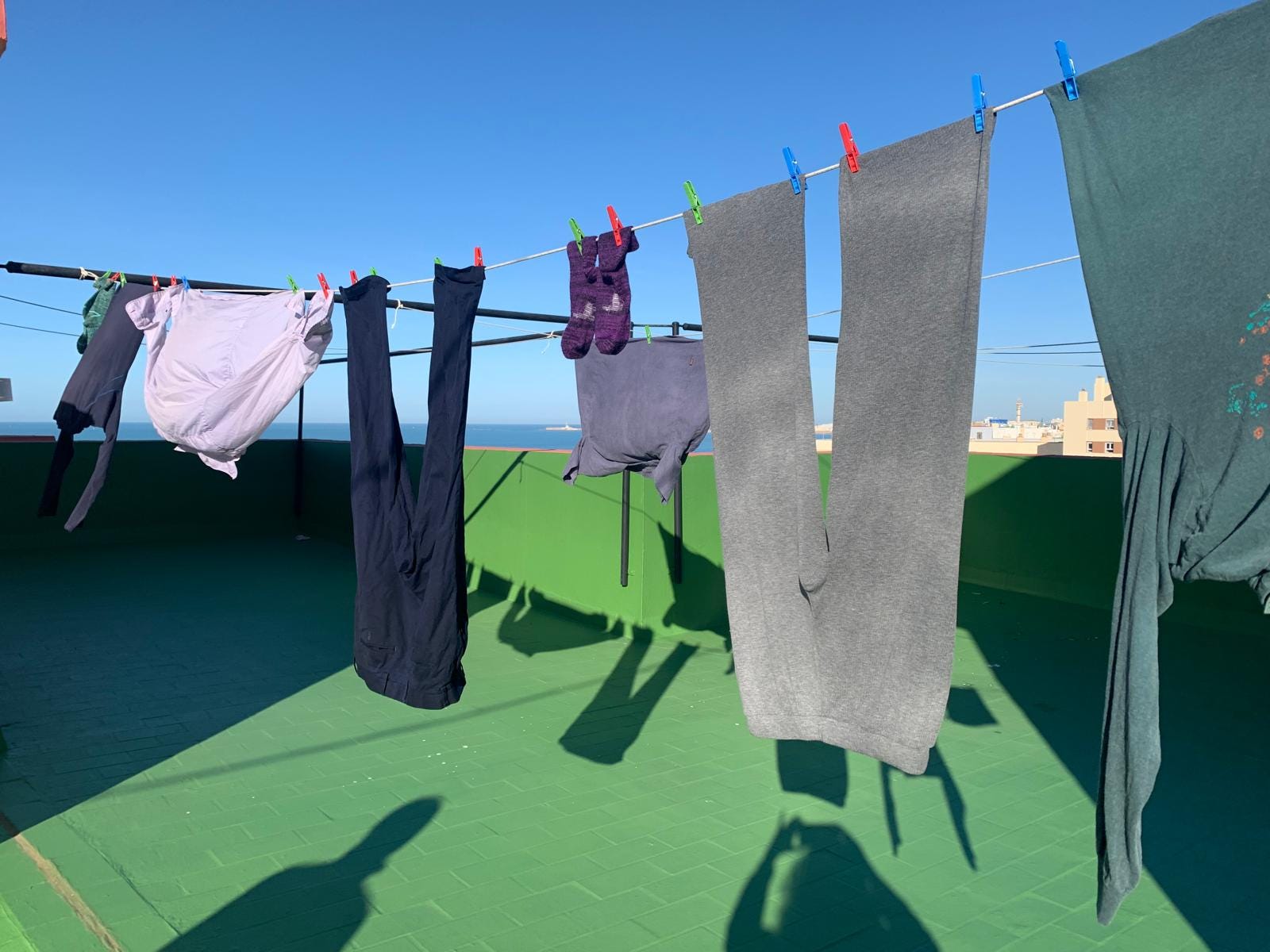
What a saga! I will look for roof clotheslines now whenever I’m in Spain.
So interesting these politics of clothes drying! Thanks for sharing.
In my Mexican apartment I have a laundry room (big change from having NO washer or dryer in my NYC building) so I got a washer and dryer! But apparently the electricity was only set up for a washer since most Mexicans also hang their laundry so I had to get it redone to have both.